
A dead outlet is rarely just a dead outlet. The device is the part you can see. What failed is usually the connection behind it.
Outlets and switches are simple hardware. They are also the most handled parts of the system, and they sit at the end of connections made decades ago by whoever was holding the screwdriver.
Many outlets are wired by pushing the wire into a hole in the back of the device rather than wrapping it around the screw. It is faster, and it is permitted. It is also the most common reason a circuit goes intermittent twenty years later, because the spring loses tension and the connection begins to heat.
Moving the wire to the side screw fixes it for good. That is a few minutes per device, and it is why we open the box rather than only swapping the part.
Outlets are usually wired in a run, each one feeding the next. A bad connection in one box takes out everything downstream of it, so the outlet that stopped working is frequently not the one that failed.
Finding which box is at fault is the job. Replacing the device once we are standing there is the quick part.
We open the box, look at the terminations and tell you what is there. Sometimes the answer is a two-dollar device. Sometimes it is a circuit that has been running warm for years.
The first one is urgent. The rest are the kind of thing people live with for years.
Heat at a receptacle means resistance in a connection, and resistance means something is burning energy where it should not be. This one does not wait for a convenient appointment.
The contacts inside have lost their grip. Past the inconvenience, a loose contact arcs, and arcing inside a wall box is the beginning of a problem you cannot see.
Usually a failing switch, or a dimmer that was built for incandescent bulbs and is now driving LED fixtures. Both are straightforward once we confirm which one it is.
Common in older North Valley and Corrales houses. There are three legitimate ways to deal with it, and one that is not: fitting a three-prong outlet to an ungrounded box and saying nothing. We tell you which applies.
Which outlets are dead, which are live, which share a circuit. That map tells us whether this is one device or one bad connection feeding six.
The failure is almost always visible once it is out: a scorched terminal, a back-stabbed wire, a neutral that was never properly tightened. You see what we see.
The device and the repair behind it are quoted together. Nothing goes further until you have agreed to the figure.
If the connection behind the device is what gave out, a new device alone puts you back here in a year. We re-terminate on the screws, where the connection holds.
If one connection in a run has failed, the others were made the same way on the same afternoon. We tell you what we find so you can decide whether to deal with it now or later.
Device work is some of the least expensive we do. What moves the figure is how many boxes have to come apart to find the fault, and what we find once they are open.
Every figure is a starting point · Written itemized estimate within 24 hours
In New Mexico a homeowner may do electrical work on the house they live in. Whether it is a good idea depends on whether you can tell a neutral from a ground, and whether you will confirm the circuit is dead rather than assume it. The replacement is simple. The diagnosis is the part that is not.
Usually a connection that has been loosening for years finally opened. Heat cycles work a loose terminal apart a little at a time. It looks sudden from inside the room, but it has been happening for a long while.
That is either one bad connection partway along a run, or a tripped GFCI feeding all of them. Plenty of homes have a single GFCI in a garage or bathroom protecting outlets in rooms nowhere near it, which catches people out.
Current code requires it in kitchens, bathrooms, garages, laundry areas, outdoors and unfinished basements. An older house is not forced to retrofit, but it is the least expensive safety improvement available to most homeowners.
Replacing a device on an existing circuit generally does not. Adding outlets or circuits generally does. We file it where it applies and stay through the inspection.
Brad or Brian Palmerton. Brian co-owns the company and Brad runs operations. Call (505) 585-4894.
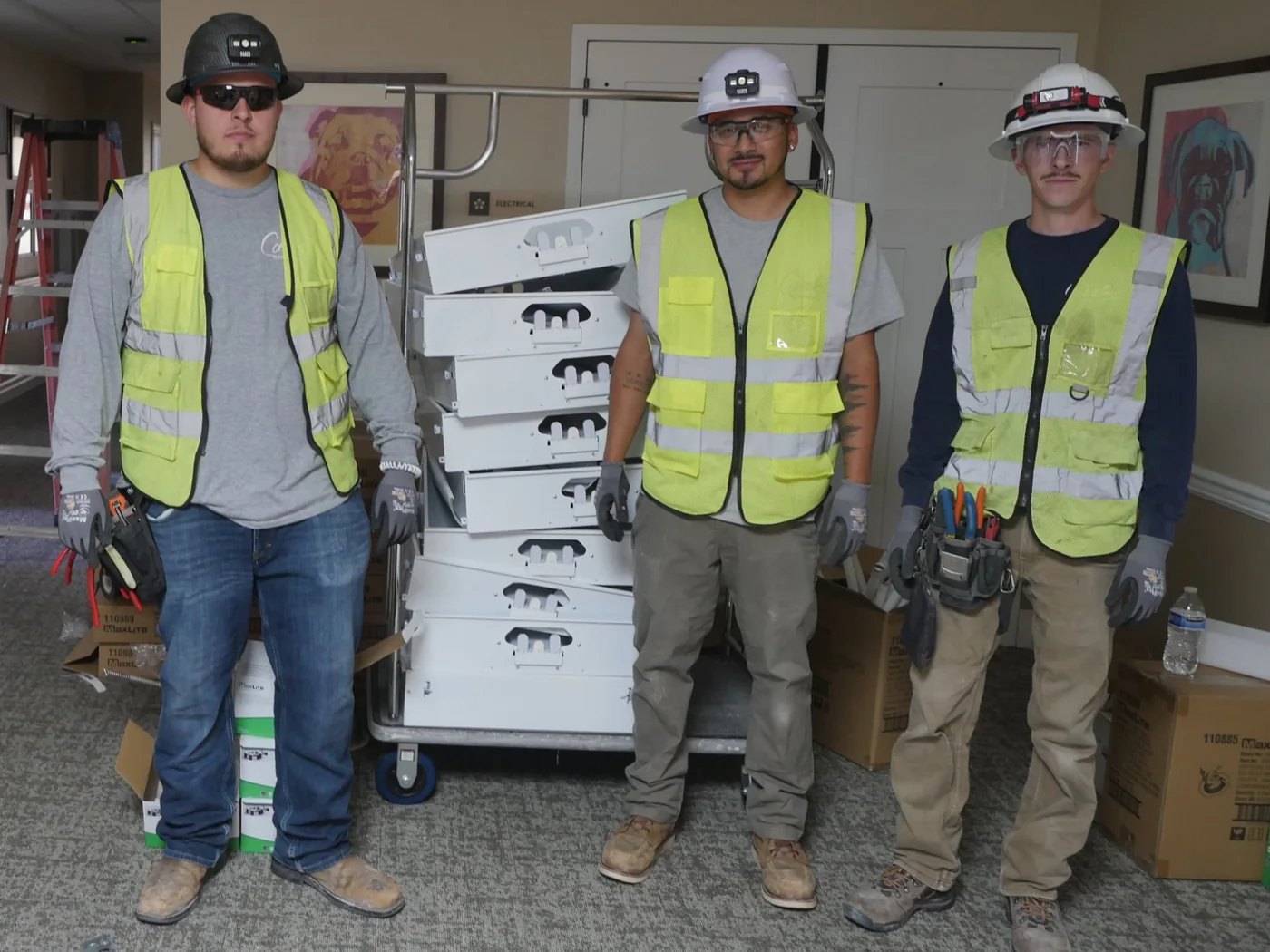
We work inside banks, secured facilities and on-base jobs, and those accounts do not let an unvetted crew through the door. Every one of our electricians clears a background check before they work for us, and again every year after that.
For a panel replacement that means the person switching off your power has been checked by somebody other than us. Almost no residential electrician in this market can say that.
We cover the metro, and the name should not make a homeowner in Los Lunas wonder whether we drive out.
When the fault is not at a device at all and the circuit has to be traced back to find it.
The protection that belongs on kitchen, bath, garage and exterior outlets, and the gaps most older homes still have.
If the house dates from the mid sixties to the early seventies, the device terminations are worth a closer look.
Written, itemized estimate within twenty-four hours from Brad or Brian. Calls answered after hours. Payment due on completion; no financing offered.