
When a building needs its own circuits, running one feeder and splitting it there beats running six circuits across the property.
A subpanel is a second breaker box fed from the main one. The point is not more breakers. The point is that the long expensive run happens once.
A shop two hundred feet from the house might need a welder circuit, lighting, general outlets and a compressor. Run those separately and you are trenching four times and paying for four sets of conductors.
One properly sized feeder to a subpanel does the same work in one trench, and leaves capacity for whatever you add next year.
Inside, the neutrals and the grounds are kept on separate bars, and the bonding screw stays out. In a main panel they are tied together. In a subpanel they must not be.
It is a small detail with real consequences, and it is the most common thing we find wrong in subpanels somebody else installed.
The feeder size comes from the load you intend to put on it, not from what is convenient to pull. That calculation happens before we quote.
Mostly they involve distance, or a building that is going to keep asking for more.
Tools, lighting, heat and outlets in one building. A subpanel puts the breakers where the work is, so a tripped breaker does not mean a walk back to the house.
A separate living space needs its own circuits for kitchen, bath and bedroom, and an occupant who can reset their own breaker without going into your house.
Common in Corrales and the North Valley. Distance is the cost driver, and one feeder is cheaper to trench than four circuits.
Sometimes the service has capacity but the box has no spaces left. A subpanel adds room without replacing the main, when the load calculation supports it.
Not what you need today, but what you expect to plug in eventually. The feeder is sized once, and upsizing it later means digging the trench again.
A subpanel does not create capacity, it moves it. If the service is already near its limit, the honest answer is that the main needs upgrading first.
Overhead, buried, or along an existing structure. On the larger lots in Corrales and the North Valley this is usually what decides the price, not the panel itself.
Feeder, grounding electrode at the separate building where required, neutrals and grounds kept apart, and a directory that says what each breaker does.
Distance and route do most of the work in this number. The panel itself is a small share of it.
Every figure is a starting point · Written itemized estimate within 24 hours
No. It redistributes what the service already has. If the house is at its limit, a subpanel moves the problem rather than solving it, and the load calculation will show that before you spend anything.
It comes from the load you plan to put on it and the distance it travels, since voltage drop matters over a long run. Sixty and one hundred amps are both common for outbuildings. We size it rather than guess.
Sometimes, and it is cheaper when it works. It depends on the span, the clearances required over the ground, and whether there is anything to attach to at both ends.
Because bonding them in two places puts normal current onto the grounding path, which is meant to carry fault current only. In a main panel they are tied together. In a subpanel they must not be, and it is what we find wrong most often.
Generally yes, a grounding electrode at the separate structure, and often a disconnecting means there as well. The specifics depend on the building and what is feeding it.
Brad or Brian Palmerton. Brian co-owns the company and Brad runs operations. Call (505) 585-4894.
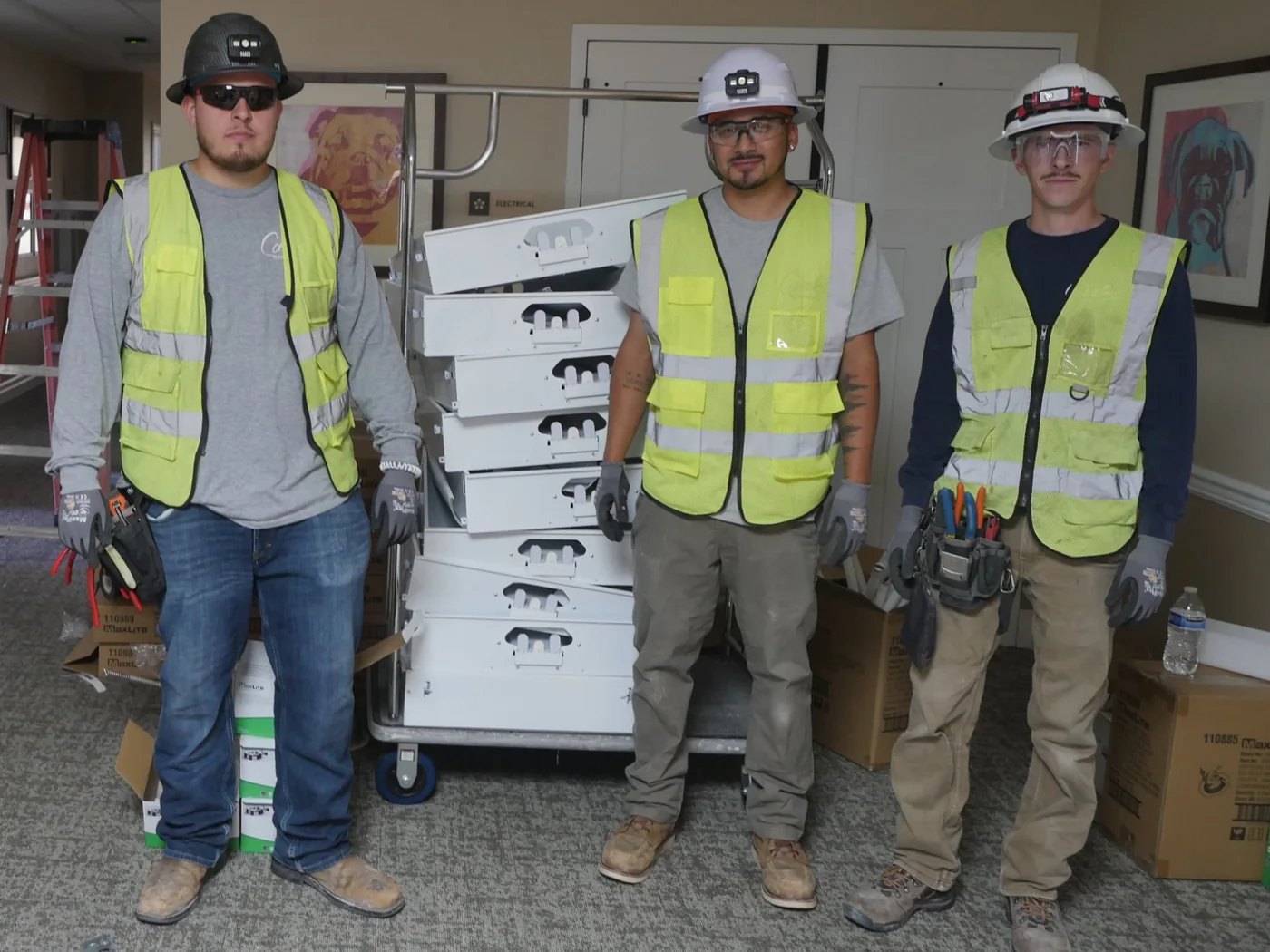
We work inside banks, secured facilities and on-base jobs, and those accounts do not let an unvetted crew through the door. Every one of our electricians clears a background check before they work for us, and again every year after that.
For a panel replacement that means the person switching off your power has been checked by somebody other than us. Almost no residential electrician in this market can say that.
We cover the metro, and the name should not make a homeowner in Los Lunas wonder whether we drive out.
When the load calculation says the main cannot spare the capacity, the main comes first.
Going to 200 amps when the whole property, not just one building, has outgrown the service.
When one piece of equipment is the whole reason for the job, a single circuit may be all it takes.
Written, itemized estimate within twenty-four hours from Brad or Brian. Calls answered after hours. Payment due on completion; no financing offered.