
One appliance, one breaker, nothing else on it. The point of a dedicated circuit is that the thing you just bought does not have to share.
Two things decide what a dedicated circuit costs, and neither is the cable. They are how far it has to travel and whether the panel can carry it.
A circuit to a garage wall on the other side of the panel is a short afternoon. The same circuit to a detached shop across the yard is trenching, conduit and a different conversation.
Attic access, crawl space, block walls and finished ceilings all move the number, which is why we look before we quote.
Every circuit you add draws on a service with a fixed rating. A load calculation tells us whether the panel has room for what you are adding, or whether it is already close to its limit.
Sometimes the honest answer is that the circuit you want needs a service upgrade first. We would rather say that up front than find it halfway through.
If the panel cannot take it, we will tell you before you have paid for anything.
Most of these come with a manufacturer requirement attached, and that requirement is usually what sends people looking.
A welder, a compressor, a table saw or a dust collector pulls enough on startup to trip a shared circuit every time.
Converting from a swamp cooler means a new 240-volt circuit sized for the condenser, plus a disconnect within sight of it.
Ranges, ovens, dryers and many dishwashers require their own circuit, and the manufacturer warranty often depends on it.
Common on larger lots out in Corrales, Placitas and the North Valley, where the load is a long way from the panel.
The nameplate on the equipment decides the breaker, the conductor size and the receptacle. A photo of it saves a trip.
We confirm the panel can carry the addition and work out how the circuit gets from there to where you need it. Both answers change the price.
You approve an itemized scope before anything starts. Where the work requires a permit we pull it, because an uninspected circuit becomes somebody's problem at resale.
The circuit is tested under load and the panel directory is updated, so the next person who opens that door knows what the breaker feeds.
By distance and difficulty, not by the device on the end. A short run in an open garage and a long run to a detached shop are different jobs.
Every figure is a starting point · Written itemized estimate within 24 hours
A circuit that serves one piece of equipment and nothing else. It runs from its own breaker in the panel to one receptacle or one hard-wired appliance, so nothing else on the circuit competes with it or trips it.
Motors draw far more current starting than running. On a shared circuit that surge trips the breaker or starves whatever else is on it. Many manufacturers also require a dedicated circuit as a condition of the warranty.
That is the first thing we check. It depends on the service rating and what is already connected, not on whether there is a free slot. A panel can have empty spaces and still be at its limit, which is why the load calculation comes before the quote.
It depends almost entirely on the route. A circuit to a garage wall near the panel is straightforward. The same circuit to a detached shop across the yard involves trenching and conduit, and costs accordingly. We quote after seeing the run.
Adding a circuit generally does. We pull it and stay through the inspection. An uninspected circuit tends to resurface during a sale, which is a worse time to deal with it.
Yes, and it is a common request here. Depending on how much you are putting in that building, a subpanel sometimes makes more sense than a single circuit, because it leaves room for the next thing rather than starting again.
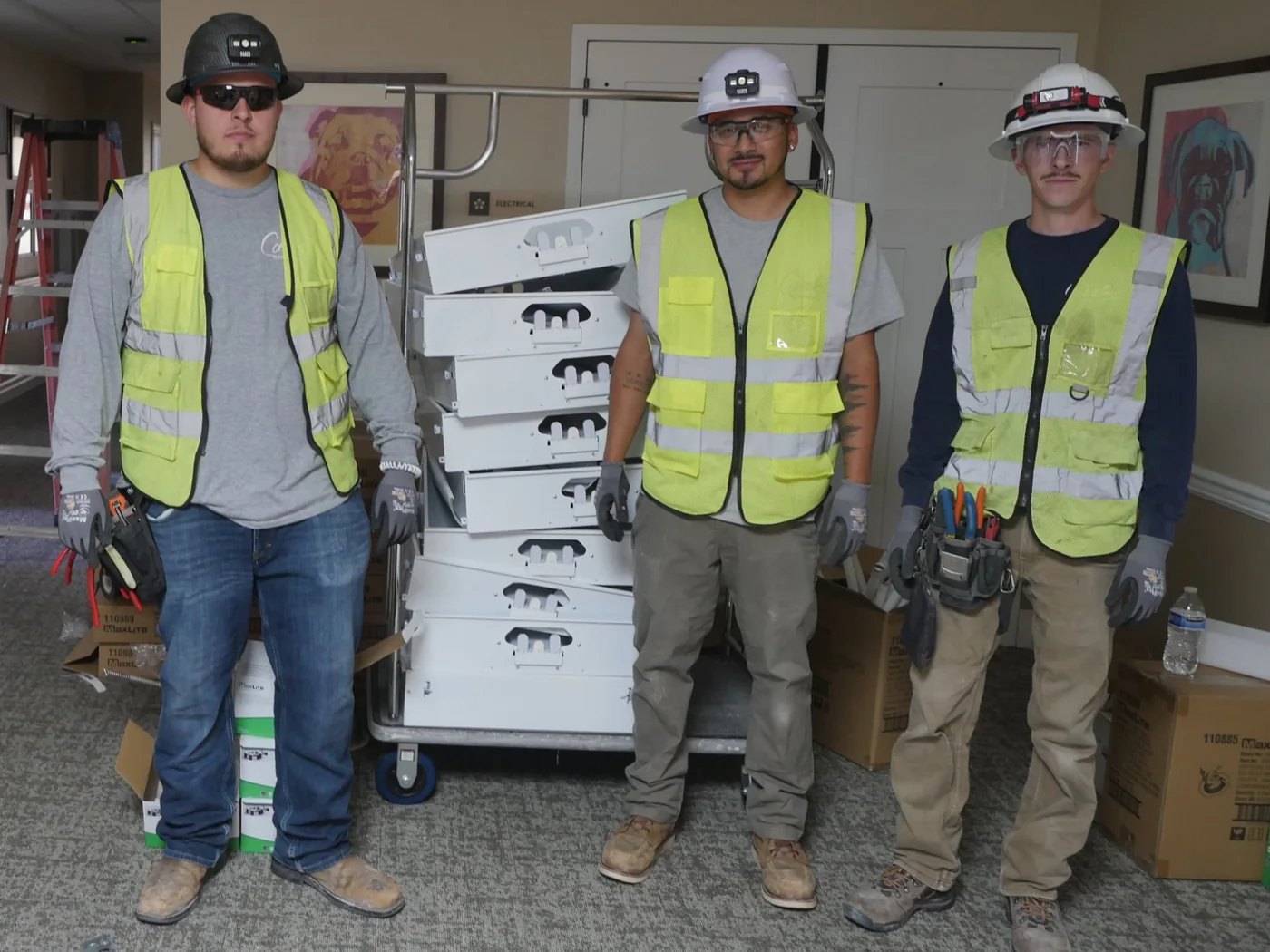
We work inside banks, secured facilities and on-base jobs, and those accounts do not let an unvetted crew through the door. Every one of our electricians clears a background check before they work for us, and again every year after that.
For a panel replacement that means the person switching off your power has been checked by somebody other than us. Almost no residential electrician in this market can say that.
We cover the metro, and the name should not make a homeowner in Los Lunas wonder whether we drive out.
Hot tubs, EV chargers, generators and casita wiring. The other ways people add load to an existing service.
When the load calculation says the panel cannot carry what you are adding.
Going from 100A to 200A, which is what makes room when the service itself is the limit.
Written, itemized estimate within twenty-four hours from Brad or Brian. Calls answered after hours. Payment due on completion; no financing offered.