
The meter belongs to the utility. Almost everything it is bolted to belongs to you. That line is where most of the confusion on this job starts.
This is the one part of the system with split ownership, and nobody explains it until something breaks.
The service drop or lateral, the connection at the point of attachment and the meter itself belong to the utility. If the fault is on that side, they repair it and they do not bill you for it.
They are also the only ones who can pull the meter so the rest of the work can be done safely. That has to be scheduled, which is why service entrance repair is rarely a same-day job.
The meter socket, the mast or conduit, the weatherhead, the straps holding it to the house and the conductors running down to the panel are all the homeowner's. A licensed electrician is required to touch any of it.
This catches people out when a storm pulls the mast off the wall and the utility declines the call. The repair is yours, and the power stays off until it is done.
We tell you which side the fault is on before we quote. Sometimes the right answer is that you should call the utility rather than hire us.
Most of these are visible from the ground, which means you can check yours this afternoon.
Wind and monsoon storms do this. A mast that has shifted has usually broken its seal, which means water is now running down the conduit toward the panel.
Burn marks around the socket jaws mean the connection behind the meter is arcing. Rust means water is getting in. Neither improves on its own.
Lights working while the dryer and the air conditioning do not usually means one leg of the service has been lost, often at the weatherhead or inside the meter base.
A deteriorated service entrance turns up on inspection reports and insurance surveys, usually with a deadline attached. We repair it and see it through the re-inspection.
Which side of the line the fault sits on decides who does the work. That determination costs you nothing, and it sometimes ends with us telling you to call the utility instead.
Service entrance work is permitted work everywhere in the metro. Where the house sits decides whether that is the city or the county, and we file with whichever applies.
The meter has to come out before anyone can work on the socket safely. That timing drives the schedule more than our crew does, and we book it rather than leaving it with you.
Mast, weatherhead, socket, straps and conductors as the job requires. Most service entrance repairs are a single day once the disconnect is in place.
The inspector signs it off and the utility reconnects. We stay with it until the power is back on, because a passed inspection with the power still out is not a finished job.
Scope is usually clear from the ground, so these quotes tend to hold. What varies is how much of the assembly has to be replaced once the meter is out.
Every figure is a starting point · Written itemized estimate within 24 hours
The meter is theirs. The socket it plugs into, the mast above it and the conductors below it are yours. That is the dividing line, and it catches almost everyone out.
You do, through a licensed electrician. The utility will reconnect once the repair has passed inspection, but they will not rebuild your mast. We can usually get the permit and the disconnect moving the same day you call.
Yes, for the length of the repair. The meter has to come out before anyone can work on the socket safely. We schedule the disconnect so the outage is no longer than the work requires.
Yes. Service entrance work is permitted and inspected across the metro. We file it and stay through the inspection.
Often it should be. The meter is already coming out and the power is already off, so combining the two avoids paying for the same disconnect and the same outage twice.
Brad or Brian Palmerton. Brian co-owns the company and Brad runs operations. Call (505) 585-4894.
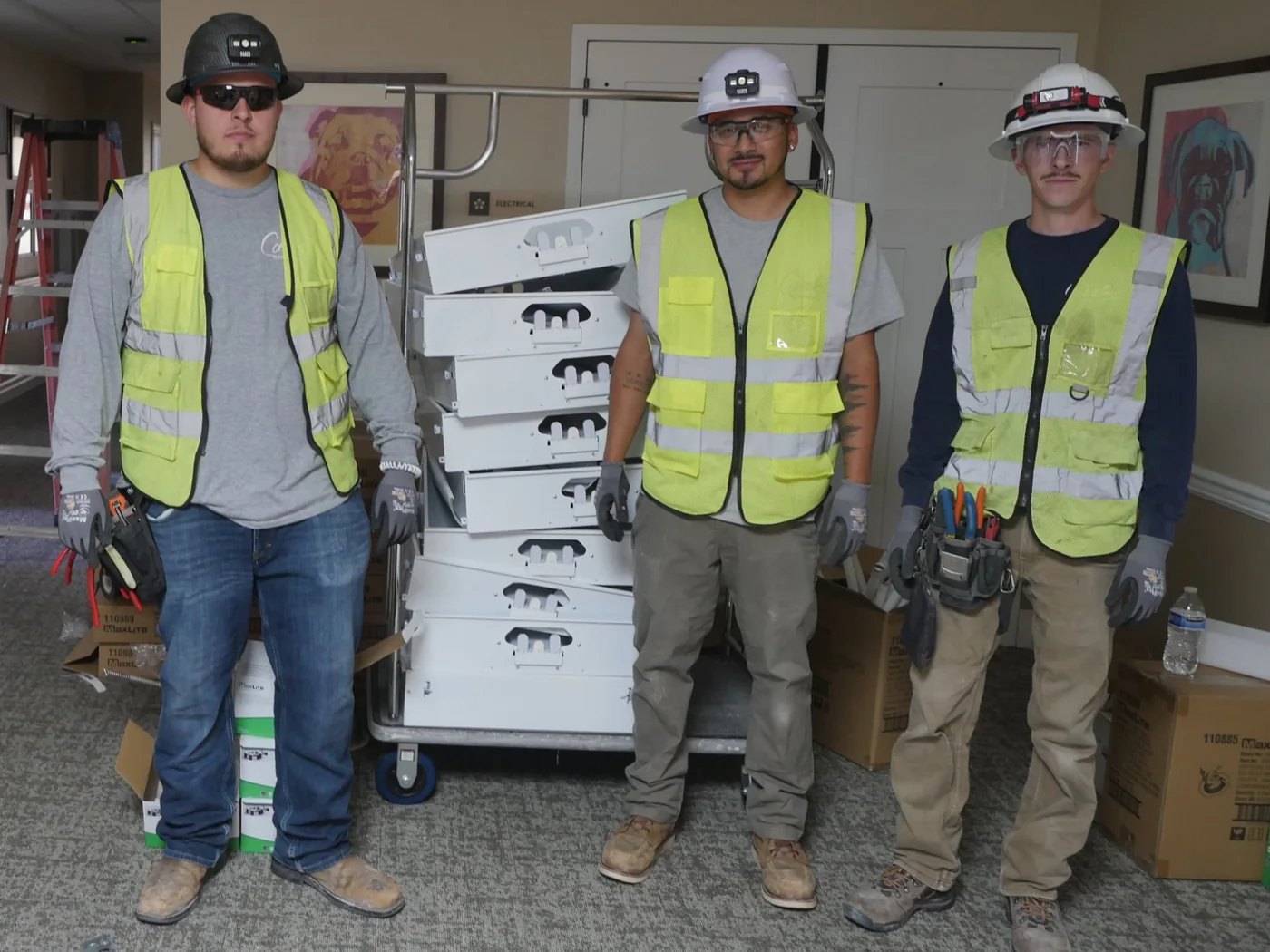
We work inside banks, secured facilities and on-base jobs, and those accounts do not let an unvetted crew through the door. Every one of our electricians clears a background check before they work for us, and again every year after that.
For a panel replacement that means the person switching off your power has been checked by somebody other than us. Almost no residential electrician in this market can say that.
We cover the metro, and the name should not make a homeowner in Los Lunas wonder whether we drive out.
If the meter is coming out anyway, the panel behind it is the cheapest it will ever be to replace.
Going from 100 to 200 amps means a new service entrance regardless, so the two jobs are usually one job.
An obsolete panel found behind a failing meter base is common in houses of the same age.
Written, itemized estimate within twenty-four hours from Brad or Brian. Calls answered after hours. Payment due on completion; no financing offered.