
The chargers are the last thing we install. What takes the time is the service capacity, the trenching and the conduit, and that is where the budget actually goes.
Most people start by choosing equipment. The equipment is rarely what decides the project, and it is rarely the largest line on the estimate.
Distance from the electrical room to the parking, what is between the two, and whether the service has capacity left. Trenching across a lot, cutting and patching asphalt, and running conduit are the heavy items.
Where the existing service cannot carry the new load, a service upgrade comes before any of it, and that changes the shape of the whole project.
Trenching is the expensive part, and it is expensive once. Pulling larger conduit and setting spare capacity while the trench is open costs a fraction of reopening it in three years.
We will usually show you two numbers: what you asked for, and what it costs to make the next expansion straightforward.
The assessment comes first. If the answer is that the site cannot support what you have been quoted elsewhere, you should hear that before you sign anything.
What the site is for changes what matters: billing, access, uptime or simply getting the conduit there.
Shared parking means shared equipment and a question about who pays for the power. Pedestal units with two ports serve two spaces from one feed, which is usually the efficient answer.
Cars sit all day, so Level 2 is plenty and load management matters more than speed. A handful of ports shared across a shift often beats fewer, faster ones.
Dwell time is shorter and the charger is partly a draw for customers. Placement, lighting and how obvious it is from the street start to matter as much as the electrical.
Vehicles return on a schedule and have to leave charged. That is a load management problem first and an equipment problem second, and it usually involves the service.
What the service is rated for, what the building already draws, and what is left. That number decides how many ports the site can support before anybody picks a brand.
Where the equipment room is, where the spaces are, and what lies between. Asphalt, landscaping and existing utilities all change the number, so we walk it rather than measure it off a map.
What you asked for, and what it would cost to leave room for expansion while the trench is open. You decide which one gets built.
Trenching, conduit, feeders, pads and bollards, then the units themselves. Bollards are not optional in a parking lot, whatever the equipment quote says.
Inspected, energised, tested under load and handed over with documentation of what was installed and where it runs, which matters the first time something needs service.
Every one of these is site specific, because the distance from the panel to the parking space is the largest variable and no two lots are the same.
Every figure is a starting point · Written itemized estimate within 24 hours
That comes out of the capacity assessment rather than out of the parking count. The service rating and the building's existing demand set the ceiling, and load management can raise how many ports fit under it.
Usually not. Level 3 suits sites where vehicles stop briefly. Where cars sit for hours, which covers most apartments and workplaces, Level 2 does the job at a fraction of the electrical infrastructure.
Yes, through networked equipment that meters each session. That is a decision about the equipment and the service plan behind it rather than about the wiring, and it is worth settling early because it affects what gets installed.
Both are part of the job. A charger in a parking lot without protection gets hit eventually, and replacing a struck unit costs more than the bollard did.
Yes, and it is worth planning for at the trenching stage. Oversizing conduit and leaving capacity while the ground is open costs far less than reopening the lot when demand grows.
Brad or Brian Palmerton. Brian co-owns the company and Brad runs operations. Call (505) 585-4894.
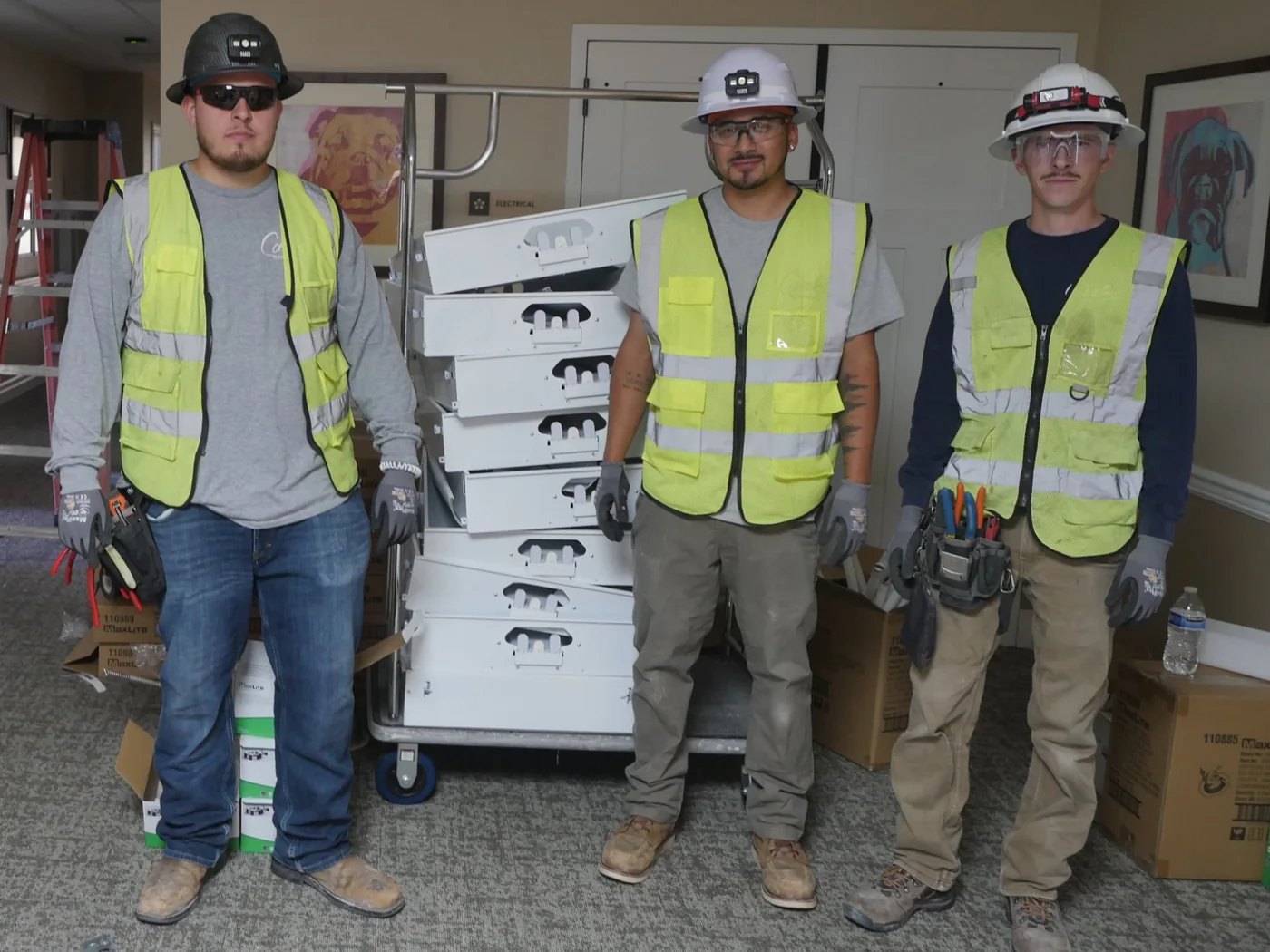
We work inside banks, secured facilities and on-base jobs, and those accounts do not let an unvetted crew through the door. Every one of our electricians clears a background check before they work for us, and again every year after that.
For a panel replacement that means the person switching off your power has been checked by somebody other than us. Almost no residential electrician in this market can say that.
We cover the metro, and the name should not make a homeowner in Los Lunas wonder whether we drive out.
Where the capacity assessment says the existing service cannot carry the charging load.
Already trenching the lot. Lighting the charging spaces properly is cheaper done at the same time.
Charging specified as part of a wider build-out rather than added to a finished site later.
Written, itemized estimate within twenty-four hours from Brad or Brian. Calls answered after hours. Payment due on completion; no financing offered.